

Here are some common questions and answers about returning to work or school as a breastfeeding mom:
Q: How often should I pump while at work? A: Pump every time the baby gets a bottle to ensure you are stimulating your milk supply as often as your baby is eating.
Q: How much milk should I pump? A: When you are pumping to replace a feeding at the breast, most moms get around 2-4oz between both breasts combined after pumping for around 15 mins.
Q: How much milk will my baby need? A: Most breastfed babies will take about 1oz for every hour mom is away. For example, if your work or school day is 6 hours, you can offer the baby 2, 3oz bottles of pumped milk.
Q: Where can I get a breast pump? A: Most health insurance plans will cover a breast pump free or at a reduced cost to you. For a list of some breast pump suppliers, contact your local WIC Clinic.
Breastfeeding in your school or workplace is a protected right in New Jersey!
Know your rights as a breastfeeding mom: https://www.dol.gov
Download a free OCHD Emergency Preparedness Tips Brochure.
Hurricane Milton is another reminder that we are still in the midst of Hurricane season!
Protect Your Home & Family By Being Prepared.
STAY INFORMED
Being prepared means staying informed. During an emergency, the Office Of Emergency Management (OEM) will provide you with the proper information about the incident. The Ocean County Health Department website serves as a resource for all health-related information in Ocean County and will provide updates during incidents. Make sure to also follow us on our social media platforms.
Download the free OCHD Emergency Preparedness Tips Brochure:
https://www.ochd.org/…/06/OCHD-Emergency-Booklet-PROOF.pdf
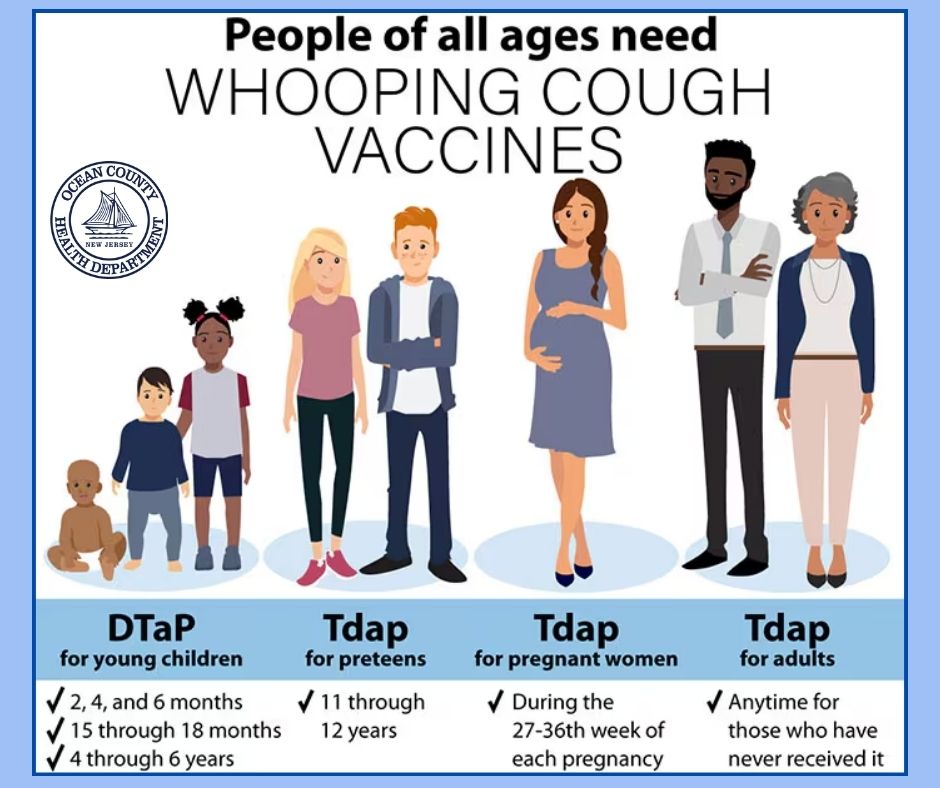
Whooping Cough (Pertussis) on the rise throughout Ocean County. Are you & your loved ones protected?
FACTS:
** In the first 8 months of 2024, the U.S. experienced 5 times as many cases of pertussis compared to the same period in 2023, the CDC reports. In Ocean County, while the rise in cases is somewhat lower than the national average, it remains substantial, underscoring the need to remind residents of the serious risks posed by whooping cough and the important steps to protect themselves and our community.
** Numbers are also higher than pre-pandemic levels (2019).
** Pertussis complications are highest in infants under one year old. There’s also a potential danger to seniors and those with chronic ill health.
PREVENTION:
** Cocooning Strategy: Adults and older children often serve as the primary source of infection in households with young infants. (Even milder cases in older individuals can transmit the disease to susceptible infants, especially those who are not immunized.) Vaccinate close contact with newborns to create a protective barrier.
** Good hygiene: Wash hands often. Cover your mouth and nose when sneezing or coughing.
** Stay updated: Immunity wanes over time, so boosters are crucial.
** While many other diseases children are vaccinated against are decreasing in frequency, cases of whooping cough have increased since 1990. This is likely due to the lower effectiveness of older vaccines (due to the emergence of new strains of the bacteria that cause the disease); decreased protection from the immunity in adults and adolescents as the effect of the vaccine wears off; parents opting out of vaccinating their children; and increased reporting of whooping cough by doctors.
___________________________________________________________________________
Two types of combination vaccines include protection against whooping cough:
1. DTaP
2. Tdap
The letter “T” in DTaP and Tdap shows they also help protect against tetanus. The letter “D/d” in DTaP and Tdap shows they also help protect against diphtheria.
____________________________________________________________________________
For more info about getting vaccinated visit: https://www.ochd.org/infectious-disease-services/
To learn more about Pertussis visit:
https://www.cdc.gov/pertussis/php/surveillance/index.html
https://www.nj.gov/…/faq/Pertussis-2024_FAQ_logo.pdf

OCEAN COUNTY HEALTH DEPARTMENT TO RECOGNIZE PRETTY PINK, HANDSOME IN BLUE DAY ON OCTOBER 16, 2024.
The Ocean County Health Department (OCHD) is pleased to announce the recognition of Pretty in Pink, Handsome in Blue Day on Wednesday, October 16, 2024. By wearing something Pink or Blue with your wardrobe for the day, you will honor and support individuals bravely battling breast cancer and other forms of cancer, while raising awareness of the importance of early detection, prevention, and the ongoing fight for a cure.
“Almost everyone has a loved one or friend whose lives have been impacted by breast cancer or by the many other types of this terrible disease,” said Gary Quinn, Ocean County Commissioner Deputy Director, and liaison to the Ocean County Board of Health. “For more than a decade, the Ocean County Health Department has encouraged community members, local businesses, schools, and organizations to take part in this day of recognition and action.”
“The Pretty in Pink. Handsome in Blue Day initiative seeks to foster greater understanding of the impact of all types of cancer and the need for continued education, research, and community support., explained OCHD Public Health Coordinator, Daniel Regenye. “’Wearing something pink or blue on October 16 is a simple yet powerful way to show the residents in our community that we stand with them and support them in their journey.”
According to the American Cancer Society, breast cancer remains the most diagnosed cancer in women in New Jersey while prostate cancer leads in men.
However, Regenye wants to remind people there is hope. “Advances in early detection and treatment methods have significantly increased breast cancer survival rates in recent years, and there are currently over 4 million breast cancer survivors in the United States,” he said.
“Some cancers can even be avoided, such as the 19% of cancers caused by smoking and at least 18% caused by a combination of excess body weight, alcohol consumption, physical inactivity, unhealthy diet, sun overexposure and cancer-related infections.”
Individuals should also remember to discuss with their health care provider the potential risk factors such as family cancer history and preventative vaccines.
The OCHD – in partnership with the NJ CEED Program – provides important cancer screening services, such as physical breast and cervical examinations, Pap smears, and colorectal cancer screening kits at no cost for uninsured or underinsured residents. To assess your eligibility or to schedule an appointment, please contact the OCHD Clinic Services Division at (732) 341-9700.
To learn more about the OCHD, please follow us on Twitter@OCpublichealth or like us on Facebook.
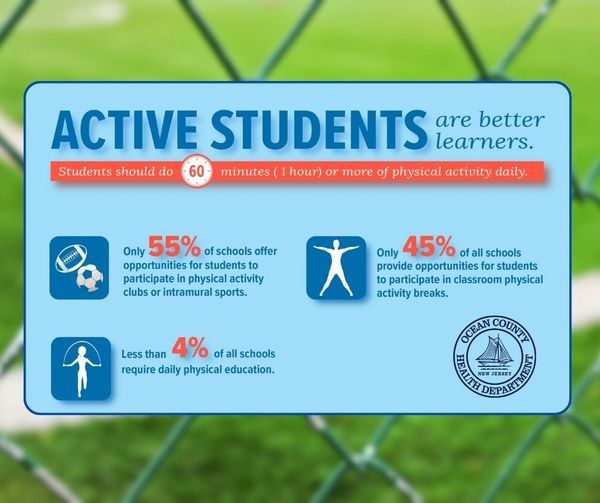
Recommendations for Physical Activity
Aerobic: Most of the 60 minutes or more per day should be either moderate- or vigorous-intensity aerobic physical activity and should include vigorous-intensity physical activity on at least 3 days a week.
Muscle-strengthening: As part of their 60 minutes or more of daily physical activity, children and adolescents should include muscle-strengthening physical activity on at least 3 days a week.
Bone-strengthening: As part of their 60 minutes or more of daily physical activity, children and adolescents should include bone-strengthening physical activity on at least 3 days a week.
These guidelines state that children and adolescents be provided opportunities and encouragement to participate in physical activities that are appropriate for their age, that are enjoyable, and that offer variety.

What are the rules of the tailgating food safety game?
Keep it clean
Over half of all foodborne illness is caused by unclean hands. The best option is washing hands with soap and warm water for 20 seconds before and after handling food.
Bring water for handwashing, if none will be available at the site. Include liquid hand soap and paper towels with handwashing supplies.
Pack disposable hand and kitchen wipes, as a cleaning alternative.
Keep cold foods cold
Use an insulated cooler with sufficient ice or ice packs to keep the food at 40 degrees F or colder.
Pack the cooler last, taking food directly from the freezer and refrigerator.
Securely contain raw meat and poultry to prevent the raw juices from contaminating ready-to-eat foods such as sandwiches and salads.
A cooler becomes a portable refrigerator; a temperature of 40 degrees F or colder should be maintained. This can be determined by placing a refrigerator freezer thermometer in the cooler.
Bring a separate cooler for beverages. Frequent opening lowers the internal temperature of the cooler and can put food at risk of being in the temperature danger zone.
The temperature “danger zone” is 40-140 degrees F. Bacteria multiply quickly on perishable foods. Foods in the temperature danger zone for 2 or more hours are unsafe to eat and should be thrown out. If it is 90 degrees F or higher outside, food should be thrown out after 1 hour.
Keep hot foods hot
To keep home-prepared foods like sloppy Joe or chili hot, insulated thermos containers work well. Fill the container with boiling water, let it stand for a few minutes, empty it, and fill it with hot food.
If electricity is available on-site or you have an auto converter, slow cookers are an option for keeping hot foods hot. To retain heat, keep the cover on the slow cooker until serving.
Hot foods should be held at 140 degrees F or above. Use a food thermometer to check the temperature.
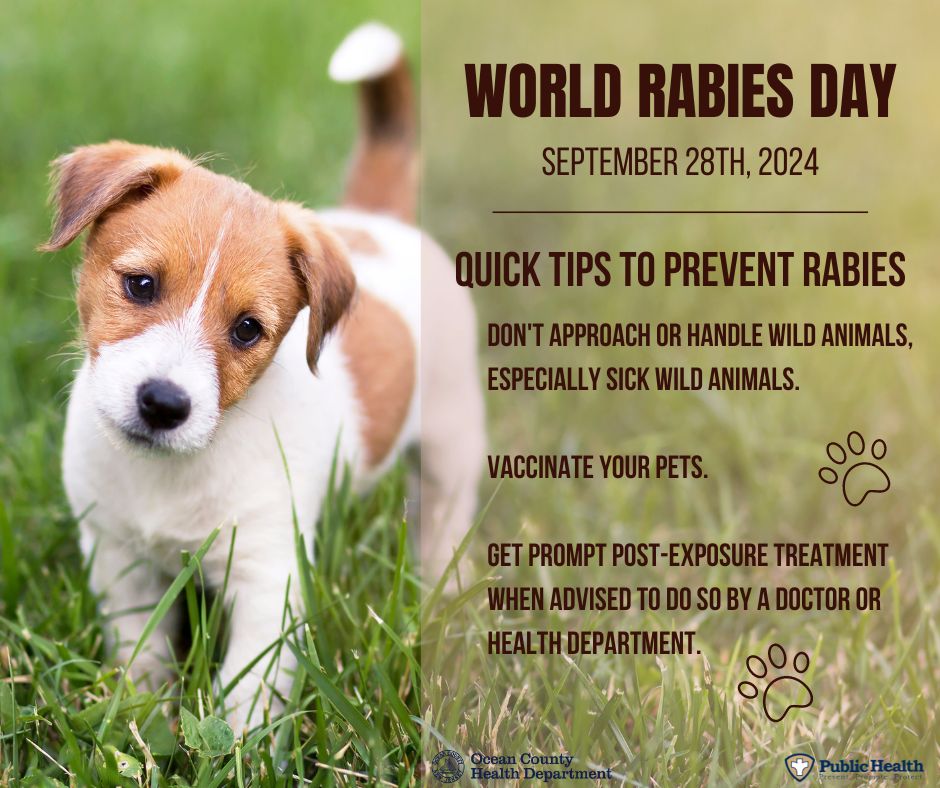
World Rabies Day is September 28, 2024
The OCHD recognizes World Rabies Day, which is celebrated annually on September 28. The theme for World Rabies Day in 2024 is “Breaking Rabies Boundaries”.
The day aims to raise awareness and advocate for the elimination of rabies globally.
The OCHD works with many organizations to promote World Rabies Day and to improve rabies prevention, tracking, and control.
The CDC’s efforts include:
Training programs to improve diagnostic testing, surveillance, and dog & cat vaccination campaigns and safety & prevention tips.
Educating communities to identify rabies symptoms and respond to animal bites.
Rabies is a viral disease that is deadly to humans if medical care is not received before symptoms appear. It is spread to humans and pets mainly through bites or scratches from an infected animal.
https://www.cdc.gov/rabies/around-world/index.html.

Both of our animal facilities offer free rabies vaccinations available for the public for cats and dogs.
BY APPOINTMENT ONLY:
Jackson (Northern OCAF) 1st and 3rd Wednesday of each month: 732-657-8086
Manahawkin (Southern OCAF) 2nd and 4th Wednesday of each month: 609-978-0127
Clinics run from 10:30am to 12pm, and we take a total of 60 appointments per clinic. There is a maximum of four pets per person.
Cats and dogs only, kittens need to be at least 3 pounds for vaccination, puppies need to be at least 12 weeks of age.
Dogs must be restrained on a properly fitting collar or harness and leash.
Cats need to be secured in a carrier.
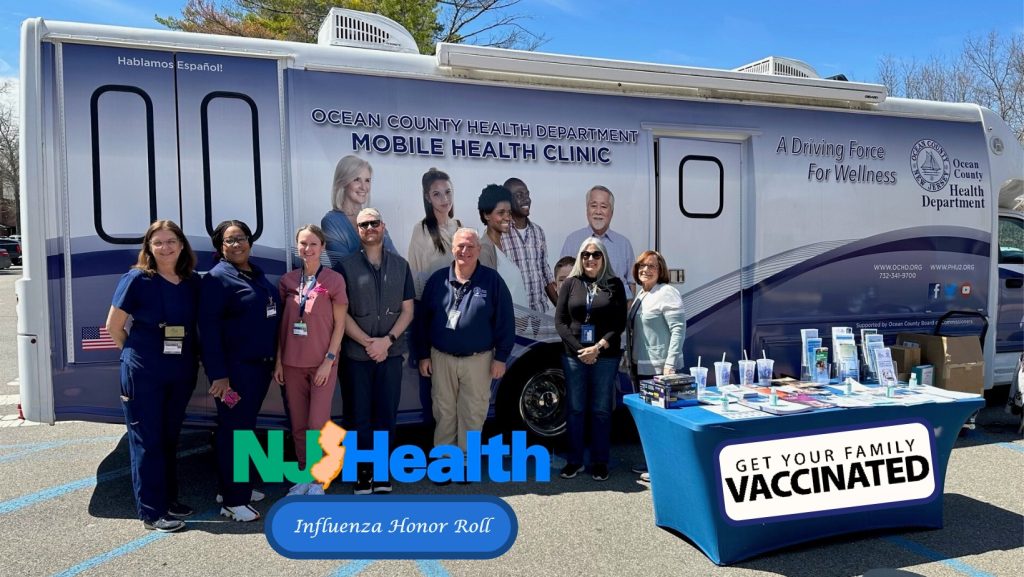
The Ocean County Health Department (OCHD) is announcing it has scheduled 3 dozen seasonal influenza and COVID-19 vaccine clinics at locations all throughout Ocean County starting in October. The first clinic is scheduled for October 8, 2024.
Beginning on October 17, 2024, and running through December 16, 2024, the OCHD will provide a weekly drive-thru clinic at Ocean County College parking lot 3 on Mondays from 12 P.M. – 6 P.M.
Additionally, the OCHD Homebound Flu/COVID Vaccine Program will continue to be available for those residents who are restricted to their homes and qualify.
“Every year the health department schedules vaccine clinics at different sites spread throughout the county to accommodate our residents,” said Daniel Regenye, OCHD Public Health Coordinator.
“This fall we are extremely pleased to announce that we are bringing back our drive-thru clinic at Ocean County College to make it even more convenient for people to get their shot.”
The Homebound Flu & COVID vaccine program is available for residents who are restricted to their homes.
Call to schedule: 732-341-9700 Ext 7290.
Summer may be coming to a close, but water safety is more important than ever!
At this time of year, many Jersey Shore residents like to call the next several weeks “the local’s summer” now that most of our visitors have returned home.
That means many of us will flock to the empty beaches and look to enjoy the water while it remains warm.
However, the OCHD and Ocean County emergency responders are urging individuals and families to take extreme caution now that most lifeguards are off-duty at our local beaches.
Factors contributing to drownings include dangerous currents and strong rip tides, lack of barriers or fencing, hidden water hazards, and unexpected, unsupervised access to pools and open water.
The U.S is experiencing an unprecedented drowning crisis, especially among young children of all ages, according to a recent CDC report.
Drownings among kids ages 1-4 – already the leading cause of death for this age group – has risen 28% since 2019, while the rate for African-Americans climbed 28% in 2021 compared to 2019, the data revealed.
Overall, there were more than 4,500 drownings in the U.S. annually from 2020 to 2022, an increase of about 10% over the past few years. These grim statistics underscore the urgent need for enhanced year-round water safety measures year-round to combat an entirely preventable tragedy.
Water safety is essential 365 days a year – not just during the summer months.
Remember to always practice and follow the ABCDE’s of water safety: A is for ADULT supervision, B is for BARRIERS around water (i.e. four-sided fencing around a pool), C is for swim CLASSES and CPR training, D is for avoiding DRAIN entrapment and using DEVICES such as Coast Guard-approved life jackets, and E is for EVERYWHERE because water is all around us.